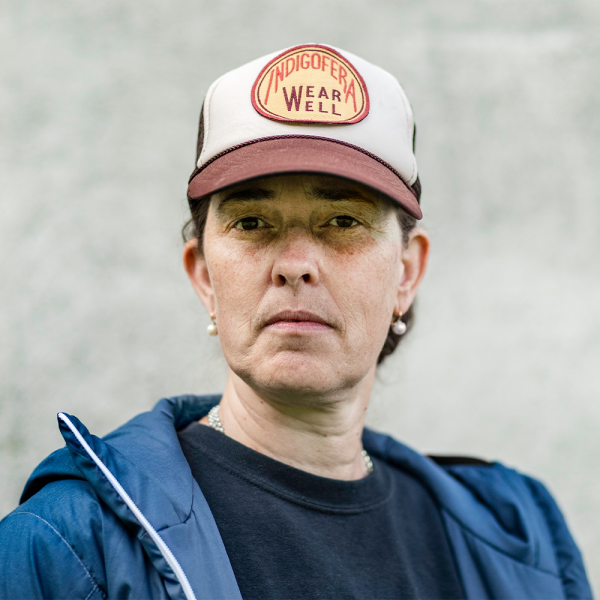
Sandra Knecht is a Swiss artist whose multidisciplinary practice uses relationships as its primary material. She explores the notions of home and belonging—how they arise, what fosters security and trust, and what creates alienation. Her work involves people, bodies, food, smells, language, music, memories, spaces, animals, landscapes, and objects, bringing them into dialogue to create situations where new connections and meanings can emerge. Food and cooking play a central role in her practice. Cooking is a craft, a ritual, and a form of translation, transforming experiences, memories, and relationships into taste. Eating, as a social act, requires trust and responsibility, with outcomes that cannot be fully controlled. Knecht approaches this as composition, arranging not just images or installations but also situations and constellations: Who comes together? What is shared? What is spoken, remembered, or left unsaid? Her work also expands the idea of direction. She selects people, materials, places, and actions, creating conditions for something to happen without dictating the outcome. This process embraces unpredictability, treating it not as a mistake but as an integral part of the work. Risk is inherent—encounters may fail, trust may be absent, or compositions may not coalesce. Knecht uses scores as tools of direction, structuring sequences, encounters, and transitions while allowing space for the unexpected. From these situations, social sculptures emerge, formed by the constellations between people, things, bodies, places, and memories. The social event is not a byproduct but the material itself. Rooted in personal experience, her work extends beyond biography, focusing on the tangible experience of belonging, alienation, decisions, and responsibility.